
Last Updated: October 31, 2026
Quick Summary
To build a sustainable wardrobe, start with a full wardrobe audit of what you already own, sorting pieces into keep, repair, and let go piles before buying anything new. Then buy fewer, better essentials, care for them so they last, and verify a brand's claims before you spend.
- A wardrobe audit usually takes one afternoon and ends with a list of what is missing.
- Calculate cost per wear by dividing price by the number of times you expect to wear a piece.
- Wash on cold, turn garments inside out, and air-dry on a rack to extend garment life.
- Check which products a certification actually applies to, since a brand may certify only one line.
- A repair service, spare buttons, or a generous return window signal a brand expects garments to last.
Table of Contents
- Start With What You Already Own
- How to Create a Capsule Wardrobe That Works
- Wardrobe Essentials Worth Buying Well
- How to Care for Clothes So They Last Longer
- How to Vet Sustainable Clothing Brands
- Shop So Much Fashion for Effortless Everyday Pieces
- Frequently Asked Questions
Start With What You Already Own
The fastest way to build a sustainable wardrobe is to stop shopping and start counting. Most people wear a small fraction of what hangs in their closet, so the first step in learning how to build a sustainable wardrobe is a full wardrobe audit, not a shopping spree.
Here is how we would run one:
- Pull everything out and lay it on the bed.
- Make three piles: keep, repair, and let go.
- Try each "keep" piece on. If it does not fit today, it goes.
- Bag the "let go" pile for donation, resale, or textile recycling.
- Write down what is missing before you buy anything new.
A wardrobe audit usually takes one afternoon. The EPA guidance on textile waste explains why this matters: clothing that never gets worn still carries the full cost of making it.
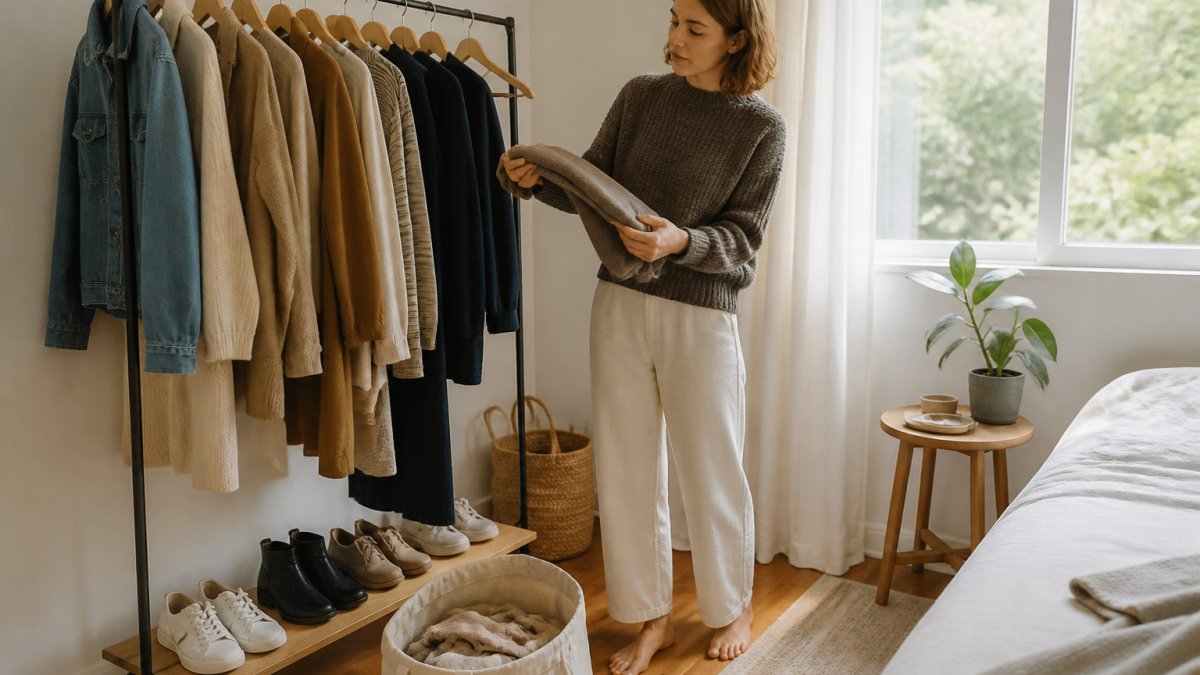
What most guides miss is the repair pile. A loose seam or missing button is not a reason to toss a garment. It is a ten-minute fix that keeps a piece in rotation for years.
A wardrobe audit is the first step, and it follows a simple sequence.
| Step | What to do |
|---|---|
| 1 | Pull everything out and lay it on the bed |
| 2 | Make three piles: keep, repair, and let go |
| 3 | Try each keep piece on; if it does not fit today, it goes |
| 4 | Bag the let go pile for donation, resale, or textile recycling |
| 5 | Write down what is missing before buying anything new |
How to Create a Capsule Wardrobe That Works
A capsule wardrobe is a small, curated set of pieces that mix and match across most of your week. The goal is not a number. It is a closet where nearly everything works together. But most guides stop at that definition and leave you with a formula that ignores real life.
Start with a simple formula:
- Pick two base colors and one accent.
- Choose versatile basics you can layer.
- Add a few pieces that carry your personal style.
- Cap the total at a size you can actually wear.
That formula is a starting point, not a rule. The real work is in the trade-offs. A capsule for a remote worker in a mild climate looks nothing like one for a teacher in a cold city or a parent who needs washable pieces. Before you buy anything, answer three questions: What does my week actually look like?
A ribbed midi dress is a good example of a capsule piece because it moves from work to dinner. But do not copy someone else's capsule list. A piece that works for a stylist in a temperate city may fail for a nurse on night shifts or a student in a humid climate.
Cost per wear is the number that matters here. A piece you wear often costs less per wear than a cheap item that sits unworn. Calculate it by dividing the price by the number of times you expect to wear it. A $60 jumper worn 60 times costs $1 per wear.
Inclusive capsule planning means accepting that bodies change, budgets vary, and accessibility needs matter. If your budget is tight, start with what you own and fill gaps second-hand. A capsule is not a uniform. It is a tool for making fewer, better decisions.
Wardrobe Essentials Worth Buying Well
Wardrobe essentials are the pieces you reach for most: plain tees, lounge pants, a good knit, and one layer for cooler days. Buy fewer of these and buy them well.
Material is where the trade-offs live. Natural fibers like linen, wool, and organic cotton breathe well and last. Bamboo viscose is soft and moisture-wicking. Synthetic fibers are durable but shed microplastics in the wash. There is no perfect fabric, only the right fabric for how you will wear it.
For a comfortable everyday basic, our Men's Soft Bamboo Lounge Short Sleeve T-Shirt is a good example: 95% bamboo viscose with a little spandex for stretch. Pair it with the Men's Bamboo Viscose Lounge Pants for a relaxed set.


How to Care for Clothes So They Last Longer
How you care for clothes decides how long they last. The single biggest change is to wash less and air-dry more.
Clearance Men's Bamboo Short Sleeve T-Shirt - Classic Cut →
Try this routine:
- Wash on cold and only when clothes actually need it.
- Turn garments inside out to reduce friction.
- Use a mesh bag for knits and delicates.
- Skip the dryer and air-dry on a rack.
- Store folded knits flat so they keep their shape.
The Ellen MacArthur Foundation's work on circular fashion makes the case plainly: extending how long a garment is worn is one of the most effective ways to cut its environmental impact. Garment repair and simple alterations, like hemming or replacing a button, keep pieces in your outfit rotation far longer.
How to Vet Sustainable Clothing Brands
A sustainable clothing brand is one that can back its claims with specifics: named materials, named factories, and third-party checks. Vague words like "eco-friendly" mean little on their own. But most guides stop at a checklist.
Use this checklist before you buy:
- Does the brand name its materials and fiber content?
- Can it point to a certification or audit?
- Does it publish a supply chain or factory list?
- Is there a clear returns or repair policy?
- Do the sustainability claims match the price and product?
That checklist is a start. Here is how to go deeper.
Read the certification, not just the logo. A certification like GOTS (Global Organic Textile Standard) or Fair Trade Certified means something specific. GOTS covers organic fiber content, chemical use, and social criteria across the supply chain.
Look for the supply chain, not just the story. A brand that publishes a factory list or a tiered supplier map is giving you something verifiable.
Spot greenwashing patterns. Greenwashing often shows up as a focus on one small good feature while ignoring the big picture. A polyester shirt with a "recycled" label may still shed microplastics and be hard to recycle.
Check the repair and return policy. A brand that sells durable clothing should stand behind it.
Greenwashing is common, so ask for proof rather than slogans. The FTC Green Guides set out how environmental claims should be substantiated, which is a useful standard to hold any brand to.
If you are weighing up a brand, its own answers help. You can read the FAQs for common questions before buying. Check the product details on our listings before you commit.
Shop So Much Fashion for Effortless Everyday Pieces
Building a sustainable wardrobe is a series of small, deliberate choices: audit what you own, buy fewer and better pieces, care for them well, and check a brand's claims before you spend. Do that, and your closet gets simpler, not smaller for its own sake.
At So Much Fashion, we design around exactly that idea. Our pieces focus on lasting comfort, an effortless approach to style, and a sustainable mindset. Browse the full So Much Fashion collection to find everyday pieces that fit the wardrobe you are building.
Frequently Asked Questions
How do I start building a sustainable wardrobe on a budget?
Begin with a wardrobe audit rather than a shopping trip: pull everything out, sort into keep, repair and donate piles, and note what you actually wear. Most people find gaps they can fill with pieces they already own. When you do buy, prioritise cost per wear over the ticket price, shop second-hand first, and choose versatile basics that work with at least three outfits. A sustainable wardrobe grows slowly, so spreading purchases across months keeps the budget manageable.
What fabrics are best for a sustainable wardrobe?
Look for durable natural fibres such as linen, wool and organic cotton, plus recycled materials where the listing confirms them. Bamboo viscose is another option: So Much Fashion's bamboo tees blend 70% viscose from bamboo with 30% certified organic cotton, and the lounge range uses 95% bamboo viscose with 5% spandex for stretch. Synthetic fibres are not automatically out, but they shed microplastics in the wash, so wash them less often and use a lower spin cycle.
How can I make my current wardrobe more sustainable without buying anything?
Wash less, air-dry where you can, and repair small faults before they spread. Re-lacing a hem or replacing a button takes minutes and adds months of wear. Rotate outfits so each piece gets rest between wears, store knitwear folded rather than hung, and keep shoes aired out. When something truly reaches the end of its life, check textile recycling points rather than the general waste bin, since fabric does not break down in landfill.
How do I know a brand's sustainability claims are genuine?
Ask for specifics rather than adjectives. A credible sustainable clothing brand names its certifications, lists fibre percentages on the product page, and explains where garments are made. So Much Fashion, for example, states its bamboo tees are designed in California and made in China where bamboo grows, and lists the exact fabric composition. Vague phrases like eco-friendly without a certificate or supplier detail are a warning sign, so compare the claim against what the listing actually discloses.
